The “how to” era of content is ending, and most creators haven’t noticed yet.
For years, the LinkedIn playbook was obvious. Teach people how to do things. Share frameworks. Give step-by-step instructions. Position yourself as the expert. That worked. It built audiences. It built businesses.
It’s not working the same way anymore. If you’re still leading with “how to” content, you’re probably feeling it in your metrics before you’ve figured out why.
At Distinctiva, we run LinkedIn content strategy for B2B founders and executives, and we’ve watched this shift happen in real time over the past year. This is what changed, why it matters, and what to do about it.
What actually changed in 2026
AI can now give people personalized “how to” advice instantly.
Someone wants to know how to write a LinkedIn hook? They ask ChatGPT and get a decent answer in seconds, tailored to their industry, their offer, their situation. That tutorial you spent three hours writing is competing with infinite free personalized instruction.
This isn’t a future problem. It’s happening right now, inside every piece of “how to” content being published this week.
Jay Clouse, who’s built a massive audience on educational content, posted something recently that a lot of creators are feeling but not saying out loud. He said “how to” instructional content is still useful but far less valuable now, because it’s easier to prompt an AI about your specific situation and get personalized guidance in moments. He even admitted: “As an educational creator, this feels a little scary.”
If you’re building a personal brand on LinkedIn, trying to become a known voice in your industry, or following the “teach to build authority” playbook, this matters. The game changed.
The shift: from “how to” to “how I”
The shift is simple to say, hard to do.
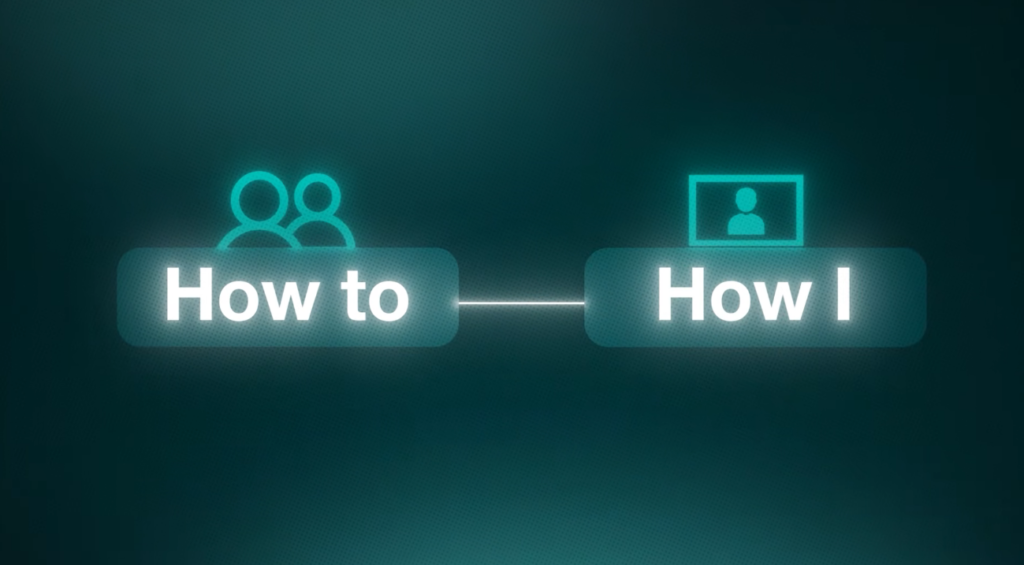
“How to” content positions you as a teacher standing above your audience. You have the answers. They need the instructions. There’s a distance built into that dynamic.
“How I” content positions you as a peer walking alongside them. You’re figuring things out too. You’re sharing what you’re learning as you learn it. You’re inviting them into your process, not lecturing from a stage.
The surprising part (even to us, watching client data): “how I” actually builds more trust than expert positioning ever did.
Why “how I” builds more trust
Think about the people you actually trust online. The creators whose content you never skip. The voices you’d actually hire or recommend.
They’re probably not the ones handing you generic frameworks. They’re the ones showing you their actual thinking. Their real decisions. Their honest results, including the failures.
Jay listed five types of content he’s still seeking out and paying premium attention to. None of them are tutorials:
- Long-form writing where people connect dots between different ideas in ways that feel original
- Effortful work where you can tell someone put real time and skill into making it
- Demonstrations where people show their actual process, not just explain concepts
- Interviews with people who have unique, verifiable experiences
- What he called “good hangs”: people who make you feel comfortable and at ease
Notice what’s missing? Step-by-step instructions. Listicles. “The 7 ways to do X.” That stuff still has a place, but it’s not what creates real connection anymore.
What “how I” looks like on LinkedIn
The difference shows up fastest in the hook. Here’s how we reframe posts with Distinctiva clients when we’re making the shift:
Before vs after (real examples)
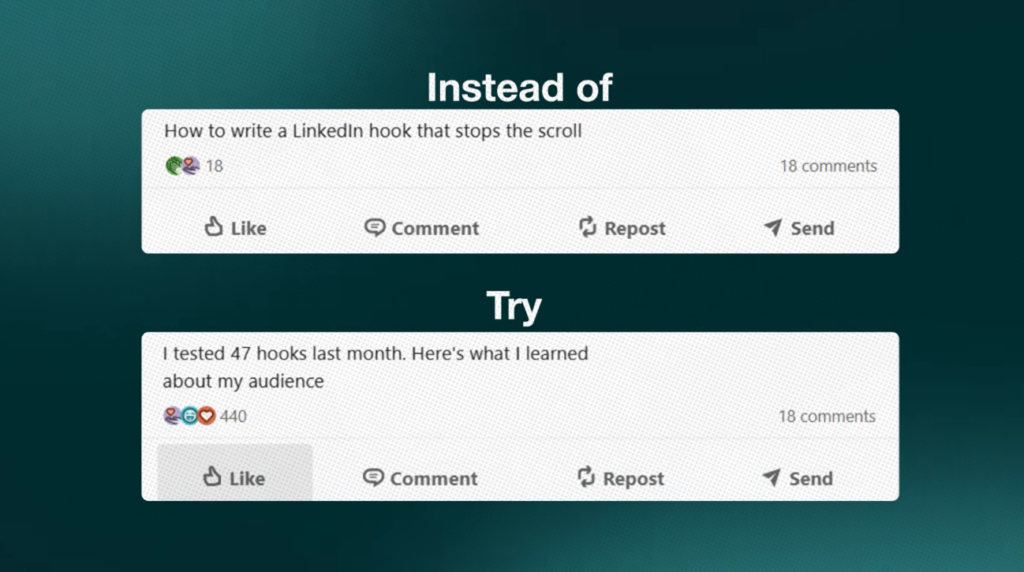
Before: “How to write a LinkedIn hook that stops the scroll”
After: “I tested 47 hooks last month. Here’s what my audience actually clicked on.”
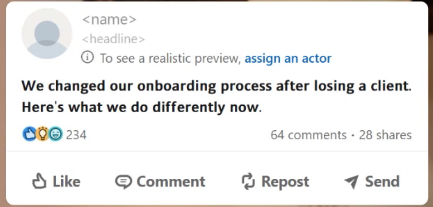
Before: “The 5-step framework for client onboarding”
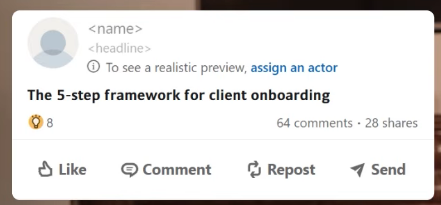
After: “We changed our onboarding process after losing a client. Here’s what we do differently now.”
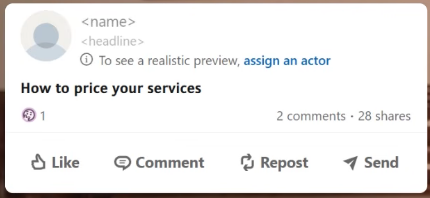
Before: “How to price your services”
After: “I raised my prices 40% and lost two clients. Here’s why I’d do it again.”
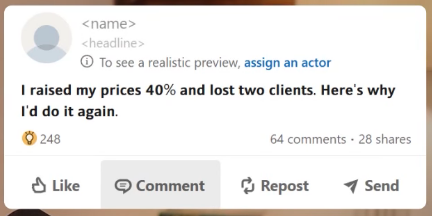
One is generic advice anyone could give. The other is a real story only you can tell. One positions you as an expert dispensing wisdom. The other positions you as a practitioner sharing your journey. And only one of them survives AI.
The vulnerability piece (this is where most creators stall)
“How I” requires vulnerability, which is exactly why it works.
When Jay wrote that post, he admitted he feels less confident and less qualified to teach right now because things are changing so fast. That’s not weakness. It’s honesty. And it made me trust him more, not less.
He literally said: “I’ll be embodying the role of teacher less in this season. Right now I feel like I’m back to being a student. A friend on a parallel journey.”
That’s the shift. From guru to guide. From expert to fellow traveler. And counterintuitively, that positioning is more powerful right now than “I have all the answers” ever was, because the landscape is changing fast and anyone claiming to have it figured out sounds out of touch.
Why “how I” content is AI-proof
There’s a strategic reason to care about this beyond vibes and trust.
“How I” content is AI-proof. “How to” content is not.
When someone asks AI for advice, it synthesizes and summarizes existing knowledge. It gives the aggregated best practices. What it can’t do is tell your story, share your specific failures, or demonstrate how you personally approach a problem.
Here’s what most people miss: LinkedIn is now the second most cited source in AI overviews. Your content isn’t only competing for attention in the feed. It’s potentially training the AI systems that will make recommendations to your future buyers.
Generic “how to” content gets absorbed and summarized. Your frameworks become everyone’s frameworks. “How I” content becomes a citation, a source, a specific example that AI references because it’s unique to you.
You become the case study, not the commodity.
How we’re applying this with Distinctiva clients
We saw the shift play out clearly with one of our clients, a B2B SEO agency. When they were posting generic “how to rank on Google” content, they were getting likes but not leads. We restructured their feed around “how I” storytelling: specific client transitions, the moves they made and why, the decisions that didn’t work.
The result: they went from $800K to $3.6M ARR with 90% of pipeline coming from LinkedIn organic. Zero outbound. 11 qualified leads in a single January. Pipeline didn’t come from one viral post. It came from switching the whole system from teacher-mode to practitioner-mode.
Every post got a job (Growth, Authority, Conversion, or Personal), and every job was executed through “how I,” not “how to.”
How to make the shift if you’ve been doing “how to” for years
1. Document more than you instruct
The next time you solve a problem for a client or make a decision in your business, write about what you actually did. Not what people “should” do. What you did. Why you did it. What happened.
2. Share your learning in real time
You don’t need to have figured something out before you post about it. Some of the best content comes from being in the middle of a challenge and sharing what you’re discovering along the way.
3. Include the failures
Your wins matter. Your losses are what make you relatable. Every audience is tired of highlight-reel posting. The mess is where trust gets built.
4. Show your actual work
Don’t only explain your process. Demonstrate it. Screen share. Show the document. Walk through the real example. Let people see how you actually think, not just hear you describe it.
The bigger picture
What we’re really talking about here is a shift in what creates value.
Information used to be scarce. If you had knowledge other people didn’t have, you could build a brand just by sharing it. That world is gone. Information is abundant. Anyone can get the “how to” in seconds.
What’s scarce now is trust. Real experience. A genuine point of view earned through actually doing the work. That’s what people are hungry for, and that’s what cuts through the noise.
“How I” is how you deliver that. Walking alongside your audience, being honest about what you’re still figuring out, sharing instead of lecturing.
The takeaway
The “how to” era isn’t dead. Instructional content still has a place. If that’s all you’re creating though, you’re playing a game you can’t win anymore.
The creators who will win the next few years are the ones who shift from teacher to practitioner. From expert to guide. From “here’s what you should do” to “here’s what I’m doing and learning.” That’s the trust shift, and it’s already happening.
At Distinctiva, we help B2B founders and executives build content systems that actually drive revenue, not just impressions. If you want to see what a “how I” content engine looks like built for your business, check out distinctiva.io or send me a DM. We’ll figure out what your content is missing.