|Fired from an SEO agency at 22. Living in Medellín, no clients, no network, no savings. By 25 I’d built a million-dollar business through one platform: LinkedIn. No ads, no big following, no posting across five channels.
The system behind that comes down to a handful of frameworks. Pick one platform and own it. Build a profile that converts like a landing page. Run a four-bucket content system where every post has a job. Use comments as your distribution engine before your posts can carry you on their own. The 2026 LinkedIn algorithm rewards meaning over keywords and favors smaller accounts, which makes right now the best window to start since the 2022 boom.
This is the full breakdown of what I’d do from scratch. At Distinctiva, this is the same system we build for B2B founders and executives every day. The video walks through it end to end with the screenshots and live examples. The article below is the practical map.
Why I’d bet everything on one platform
LinkedIn has 1.3 billion members and only about 3% of them post weekly. Picture a stadium with 50,000 seats. Almost everyone is in the stands watching. Almost nobody is on the field. When you walk onto that field and start performing, every person in those seats can see you. You don’t have to be the best. You have to be there.
The audience is the part most people miss. These aren’t people scrolling to be entertained. They’re founders, CMOs, executives with budgets and a problem they need solved this quarter. When someone on LinkedIn sees your content and thinks “I need this,” they can act on it the same day. No other platform puts you in front of buying intent like that.
The “be everywhere” advice sounds right on paper. More platforms, more reach. In practice it makes you generic, because content built to work everywhere works nowhere. It burns you out, because managing five channels is a full-time job and you quit before anything compounds. And it stops you from ever building intuition. Learning an algorithm is like learning a city. Live in one long enough and you stop needing a map. Split across five and you stay a tourist forever.
The real question was never which platforms to be on. It was where my buyers live and how to own that channel before anyone else did. I ignored every other platform until I hit a specific revenue milestone. That one decision carried most of the early growth.
The LinkedIn algorithm got rebuilt, and it favors smaller accounts now
Before you decide what to post, you need to understand what changed underneath the platform. LinkedIn advice from two years ago is a map of a city that got demolished and rebuilt.
LinkedIn’s own engineers published a nine-page paper on how they rebuilt the system from scratch. They call it 360Brew. The old setup worked like a committee: one module tracked trending topics, another tracked hashtags, another measured how fast a post got likes in the first hour, all of them voting on what to show. That’s gone. One AI model replaced it. 150 billion parameters, trained entirely on LinkedIn’s own data. One brain instead of a committee.
The shift that matters: the old system matched keywords, the new one reads meaning. It asks whether your post belongs in front of a specific person based on everything it knows about them. It tracks whether people stopped and read what you wrote, not whether you posted at the optimal time. That’s why engagement pods stopped working. 360Brew knows the difference between a real comment and someone who typed “great insight” without reading a word.
The part that surprised me most: the new system actively favors smaller accounts. LinkedIn ran A/B tests before rolling it out, and accounts with smaller networks saw measurably better outcomes. Data from 50,000 posts in late 2025 showed a top-10% post from a 5 to 10K-follower account pulling around 5,500 impressions, while a median post from a 25 to 50K account got 2,400. A great post from a small account beats an average post from one five times its size. Execution outweighs audience size now.
What stopped working
Timing optimization, hashtags, engagement pods, and generic advice all lost their edge. The system reads meaning instead of labels, tracks genuine dwell time, and notices when thousands of people post the same five tips. What it rewards instead: real expertise, content people actually dwell on, saves over likes, and a voice that sounds like a human with a point of view.
LinkedIn SEO is the part almost everyone skips
360Brew reads your profile before it distributes a single post. It’s asking, based on who this person says they are, does this content belong in front of that audience. Your headline and about section tell the system what you’re qualified to speak on.
An SEO consultant who’d watched his impressions flatline for six months changed one thing: his headline and about section. Reach climbed 226%, engagement 327%, same content, same frequency. A prospect found him through LinkedIn search that same week. One of our own clients who now pays $20K a month first found me through that same search bar.
A few changes move the needle here:
- Write a headline with the keywords your buyers actually search, not your job title. “SEO and AEO consultant for B2B SaaS” beats “SEO consultant” because it matches how people search in an AI-first world.
- Fill in your services section with the exact language your ICP uses. Most people leave it blank. It’s searchable gold.
- Treat your about section like a sales page with natural keywords woven in, written the way your buyer describes their own problem.
- Post consistently around your core keywords so the system builds a clear content fingerprint of you over time.
- Name your carousel files before uploading and add alt text to images. The system reads both. Almost nobody does this.
Your profile is the landing page, not your posts
Before you write a single post, fix your profile. This is the most skipped step. People spend weeks crafting content and send all that traffic to a profile that loses visitors in ten seconds.
Your content is the ad. Your profile is the landing page. A great ad pointed at a confusing landing page sells nothing. When a stranger lands on your profile, they run one fast gut check: do I understand what this person does and whether it’s for me. When the answer isn’t obvious, they leave. That’s a profile problem, not a content problem.
Each piece of the profile has a job in that funnel:
- Your banner is the re-hook. The post stopped the scroll, the headline got the click, the banner pulls their eye down to your featured section.
- Your headline is your value proposition, not your title. Use the problem you solve, who you solve it for, and the words your buyers search.
- Your about section follows one structure: problem, solution, proof, CTA. Not your autobiography.
- Your featured section moves people one step closer into your world, somewhere you own the relationship. A newsletter signup, a booking link, a lead magnet. LinkedIn owns your followers. You don’t.
- Your custom CTA button is free real estate. Link it to a booking page or a download, not your homepage.
That whole sequence is a funnel. Post and headline get them to your profile. Banner gets them to your about and featured sections. Featured section gets them into your world. Lose any step and you lose the person. Spend one full day on this before you post anything.
Steal before you create
Before your first post, spend 72 hours studying the landscape you’re entering. There’s a book called Steal Like an Artist, and its core point is that nothing is fully original. Bad stealing copies one person. Good stealing studies many, absorbs what resonates, and remakes it into something only you could make. A bad musician learns one song note for note. A good one listens to fifty artists and writes something that sounds like nobody else.
Find accounts in your space getting real engagement from the right people. Judge by post performance, not follower count. A 3,000-follower account with strong engagement from your ICP teaches you more than a 100K account whose comments all come from other creators. Study them like case studies: which topics they return to, which hooks stop the scroll, which formats get traction, how they close. Pay closest attention to the outliers and figure out what made each one land.
Then start posting. Steal formats, hooks, and design frameworks, never ideas. Rebuild a proven hook structure around your own experience. Apply a framework someone used for one concept to a completely different one. After about six months something shifts. You stop noticing what works for everyone else and start noticing what’s missing, what your niche keeps getting wrong, what nobody is saying. That’s when you stop borrowing and start building something that’s yours.
The Content Stack: four jobs your content has to do
Random posting doesn’t build anything. You need a system. Think of your content like a sales team where every person has a different job. One brings in new leads. One builds trust. One closes. One keeps existing relationships warm. When everyone does the same job, the pipeline breaks.
I call this the Content Stack. Four buckets, four jobs, roughly 40% growth, 30% authority, 20% conversion, 10% personal. Not hard rules, but zoom out over a month and all four should be there.
The Authority Paradox
Growth content is the one people get most wrong, and it starts with a hard truth. You could have a $70M exit, a decade of experience, and a client list that turns heads, and still get ignored on LinkedIn. We lived this with a client who sold his company for over $70M. He stopped working with us for a few months, posted on his own, and the numbers were brutal. Single-digit likes on posts about a topic he built a company on.
Attention doesn’t care about your bank account. It cares about relevance. Expertise and attention are two separate currencies, and you can be rich in one while broke in the other. On LinkedIn, attention pays first. The more you know, the more you assume people will care, when nobody cares until you earn their attention. That’s the Authority Paradox.
So growth content has to push your expertise into audiences that don’t know you yet. Picture it as Total Addressable Content. The same way a business has a total addressable market, your content has a total addressable audience. The entry point is whatever those people are already watching, reading, and reacting to right now.
The four formats that break through when nobody knows your name
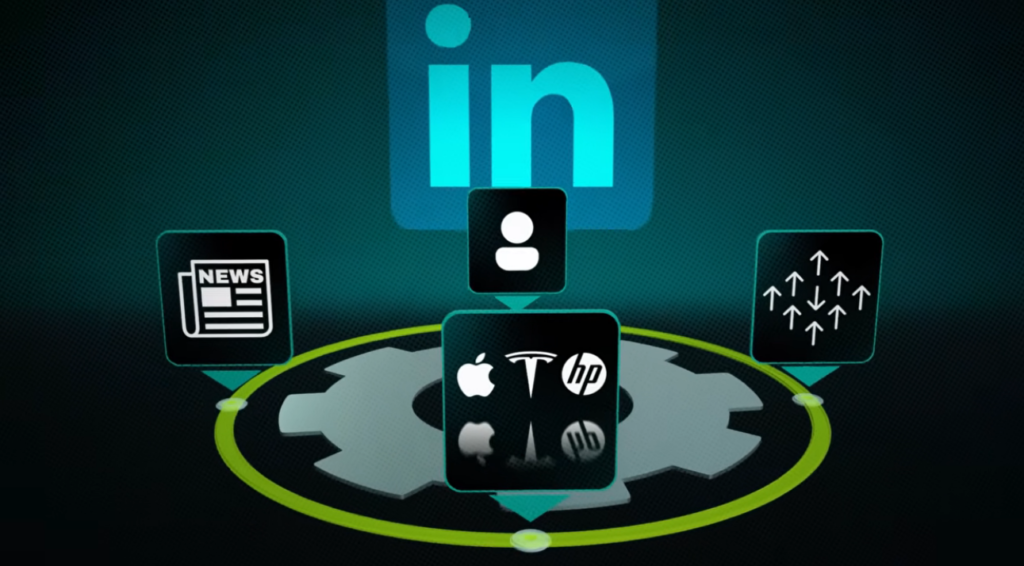
Four formats consistently break through for accounts with no audience, because each one attaches your expertise to a conversation that’s already happening:
- Brandjacking. Take a known brand’s decision or campaign and use it as the frame for your own insight. A client used Heinz dropping its logo and keeping 70% brand recognition to make a point about creative consistency: 9,247 impressions, 33 saves. Another broke down Liquid Death’s earned-media machine and hit 37,642 impressions, with the VP of Creative showing up in the comments.
- Newsjacking. Be the first credible voice to contextualize a story, not summarize it. A client who covered ChatGPT pulling directly from Google Search landed 293 comments and 234 reposts. A sharp take inside 24 to 48 hours gets pushed far harder than the same post a week later.
- Namejacking. Reference a specific person your audience already follows, then deliver a perspective that’s entirely your own. One client posted about Steven Bartlett, Bartlett himself commented, and the post hit 147,000 impressions. When the right person notices, the distribution compounds.
- Hot takes. A genuinely held contrarian belief that forces people to take a position. A client claimed original research is outranking AI-written content and pulled 396 comments, 304 reposts, 3,198 reactions. The best ones come from a pattern you’ve actually observed, not random controversy.
All four solve the Authority Paradox without waiting two years. From there, authority content builds trust through frameworks and client results, conversion content asks for the business once that trust exists, and personal content makes you memorable. When AI can generate decent content for anyone, a real person with a real point of view is the one thing it can’t copy. That’s your moat.
How to actually write the post
Write the body first, then find the hook. Most people stare at a blank first line for twenty minutes. Write the story, the numbers, the framework, then pull the most surprising line to the top. The best hooks are already sitting in what you wrote.
Say “how I” instead of “how to.” “How to build a content strategy” is a library book everyone’s written. “How I built a content strategy that closed $200K in inbound” is a first-person account, specific and impossible to copy. The “how I” frame builds more trust and it’s AI-proof. And keep it to one idea per post, explored fully. Three tips crammed together is three conversations at once, and nobody follows any of them.
The Comment Flywheel
In your first 90 days, your comments matter more than your posts. Posting to zero followers is opening a store on a street with no foot traffic. Leaving a strong comment on a post doing 50,000 impressions is setting up a stand on the busiest street in town. Every person who reads that post walks past your name.
I call this the Comment Flywheel. You borrow distribution you haven’t earned yet by showing up inside conversations that already have it, and every good comment spins the wheel faster. A good comment adds an angle the post missed, respectfully challenges the take, or tells a quick story that connects. “Great post” is wallpaper.
Be strategic about where you show up. A post with 500 likes from your exact ICP beats one with 50,000 likes from the wrong crowd. Build a simple engagement list in a spreadsheet: category, name, and their activity feed URL, not their profile URL, so you’re not pinging their profile views every day. Spend thirty minutes on strategic comments before you open your drafts. Then reply to every comment on your own posts, especially in the first hour, because the system tracks engagement velocity and those are real people who gave you thirty seconds.
The timeline nobody wants to hear
That’s the full system. One platform. The algorithm decoded. A profile built for search and conversion. The Content Stack with four jobs. Steal before you create. The Comment Flywheel as your growth engine.
Here’s the honest timeline. Your first 20 posts are practice. Posts 21 through 40 are where you find your voice. Posts 41 and beyond are where momentum kicks in. Most people quit somewhere around post 15, which is why most people never see it work.
If you want the full walkthrough with the screenshots and live examples, watch the video above. And if you’d rather have this system built and run for you, that’s what we do at Distinctiva every day for B2B founders and executives. Book a call or send me a DM and we’ll figure out what your content is missing.