How to write LinkedIn hooks in 2026: the five formats that earn the click
Sep 07, 2026
I studied 131 hooks from 21 creators growing on LinkedIn right now, and only five formats keep earning the see more click. The dense hook, punchy plus context, the single-line bomb, stacked, and the hybrid you graduate to once the first four are in your hands. Plus the pixel-width rule that makes most hook advice wrong.
Diandra Escobar
Content Manager
Share:
What's covered:
Only five hook formats consistently earn the “see more” click on LinkedIn right now. I know because I studied 131 hooks from 21 creators who are growing on the platform today, across SaaS, agencies, e-commerce, AI and B2B services, and the same five shapes kept showing up regardless of industry or voice.
I’ve been writing LinkedIn hooks for three years. For my own posts, for clients, for founders paying Distinctiva thousands a month to get this one line right. One of those clients went from $800K to $3.6M ARR with more than 80% of pipeline coming from LinkedIn and zero outbound, and every post in that run lived or died on its first 40 words.
The frustrating part is watching people with real insight and real experience write posts nobody reads. The thinking is there. The first line is soft, vague, or clears its throat for a sentence and a half before saying anything.
This post covers why the hook matters more than it did two years ago, the pixel-width rule that makes most hook advice wrong, the five formats with examples from the study, and the free Claude skill I built so you can generate hooks in all of
them for any post you paste in.
Why the first 40 to 50 words decide whether anyone sees your post
You’re writing for two readers at once.
The first is a human scrolling on a phone. Your hook has one job with them: get the click. Not summarize the post, not explain what’s coming, not set up the argument. Make them think “what’s in it for me?” and tap see more. That’s the whole job.
The second is the algorithm. LinkedIn’s rebuilt feed model (I call it 360Brew in my other videos, that’s my framing, not LinkedIn’s name for it) reads your first 40 to 50 words before it decides whether to push your post to anyone. It’s tracking whether people stop and read. A hook that earns the click tells the system this post is worth distributing.
So when the hook fails, two things die at the same time: human curiosity and algorithmic reach. A brilliant post with a weak opener gets shown to almost nobody, and then it doesn’t matter how good the rest was.
Why your 2023 hook playbook is hurting you
What works as a hook has shifted several times in three years. The hooks that worked in 2023 stopped working in 2024. What worked in 2024 doesn’t earn the click in 2026. The algorithm changed, reader behavior changed, and what people are willing to stop for looks different than it did 12 months ago.
If your hook playbook is two years old, it’s actively hurting you. You’re writing for a feed that no longer exists.
That’s why I built this on recent outliers. The 131 hooks came from the best-performing posts of 21 different working creators. Different industries, different voices, different audiences. The point was to find the pattern across all of them, so the formats below aren’t biased toward one person’s style.
LinkedIn measures width, not characters
Before the formats, one technical detail almost nobody gets right.
You can’t write hooks by counting characters. LinkedIn doesn’t render by characters, it renders by pixels. A capital W takes up roughly four times the horizontal space of a lowercase i. So 100 characters of W’s gets cut off far earlier than 100 characters of i’s.
Which means the “150 character limit” you’ve read about doesn’t exist. What exists is a pixel-width budget, around 110 width units per line on mobile before the text wraps.
Most hook advice gives you a character count. The real answer is width. Two hooks with identical character counts can land in completely different places relative to the truncation point, depending on which letters they use. Heavy caps, lots of M’s and W’s, and your hook runs wide.
The practical fix is to stop counting and start previewing. I put every hook into Kleo’s LinkedIn post formatter before publishing and look at the mobile view. If it fits on mobile, it fits on desktop. More on that in the demo below.
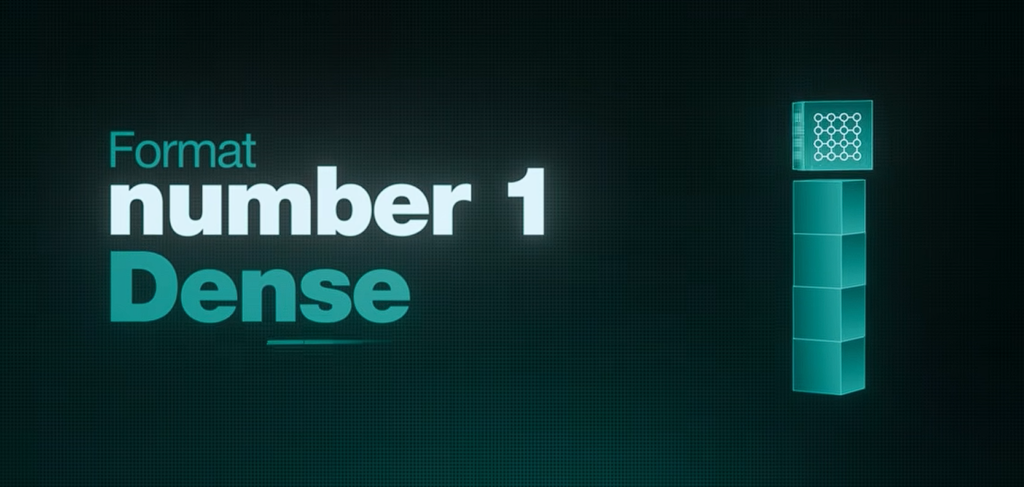
Format 1: dense
Dense means filling every pixel of space before see more cuts in. No line breaks, no spacing, one continuous block packed with as much tension as you can fit. On mobile that’s roughly three lines.
Use it when the hook needs context to land. A data point, a story setup, a claim that only makes sense as a full sentence. You’re giving the reader enough context to feel the stakes and not enough resolution to scroll past satisfied.
From the study:
I started posting in January and since then I’ve reached 1,592,810 people. All from writing on LinkedIn.
Specific number, clear claim, no throat-clearing. Every word is carrying weight.
Dense hooks came back into fashion as a reaction. Once everyone was writing the short-punchy-line style, readers started treating it as wallpaper. Psychology wins every time: when a format gets too consistent across the feed, people stop seeing it. So a wave of creators went the other way and filled the space instead.
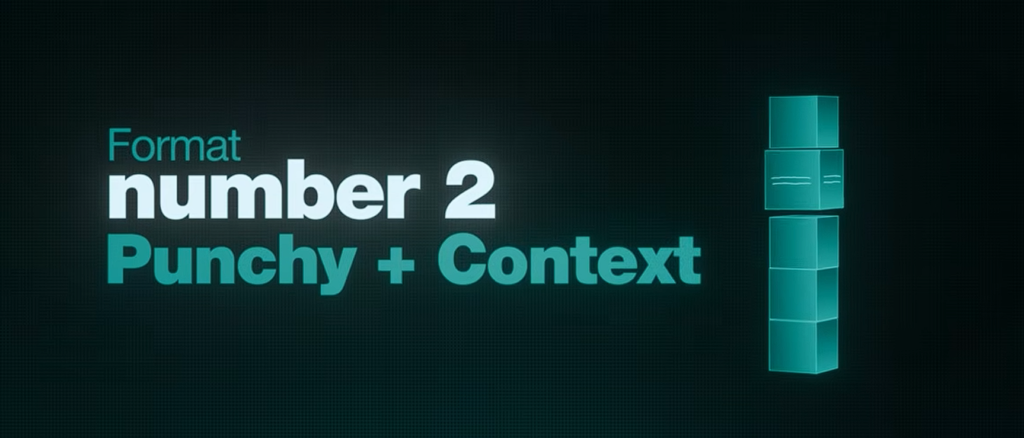
Format 2: punchy plus context
This is the format we see most, and the one with the highest hit rate.
A short, hard first line. A blank line. Then a second line of context. The blank line is doing real work: it forces your eye to pause so the first line lands before the second one moves. The punchy line drops a claim, the white space lets it sit, and the context line either deepens it, twists it, or sets up a cliffhanger.
Contrarian claim, beat, stakes. That’s the structure.
A $70M founder got single-digit likes posting solo.
Expertise and attention are two completely different currencies.
The first line gives you the what. The second line opens the gap between what you expected and what’s about to be argued. That gap is the click.
The mistake we see constantly is the punchy line trying to do everything. It explains, summarizes, hedges. The punchy line should provoke. The context line earns the click. Split the jobs.
If you only ever learned this one format, you’d be fine. It’s the workhorse. But you can go further, and the feed rewards you for it once everyone else is stuck here.
Format 3: the single-line bomb
The riskiest format, and the one I have to warn you about.
One line. No context, no setup. One sentence loaded with enough tension to earn the click on its own.
I outranked my country’s vice president.
Five words. That’s the entire hook.
The danger is obvious once you think about the algorithm. You have 40 to 50 words of real estate and you’re spending it on a single sentence. If that sentence doesn’t land, the post is dead. We don’t recommend this format unless you know in your gut the line is an actual bomb.
There’s also a technical detail most people miss. To pull this off you have to manually insert two blank line breaks underneath the hook before publishing. Without them, your second sentence gets pulled up into the same mobile line, the bomb effect disappears, and the whole structure collapses. The only thing visible above the fold should be that one line.
Use it when you have a take too good to dilute with a second line. Otherwise skip it. When it lands, though, it lands harder than any other format. Highest variance hook there is, and in content, sometimes high variance is exactly what you want.
Format 4: stacked hooks
Stacked hooks use parallel structure. Two, three, sometimes four short lines with line breaks between them, all built the same way.
X wants you to pick a fight.
TikTok wants you to dance.
Instagram wants a magazine spread.
Stacked hooks are pattern recognition. Your brain sees the structure, finishes the rhythm, and gets curious about the payoff. The human eye loves symmetry, and the implied next line (in that example, what LinkedIn wants) is what earns the click.
They work well for before and after, timelines, advice you’ve heard, doubts you used to have, or numbers in escalating order. Three regrets in the same grammatical shape build emotional weight through repetition alone.
Where stacked hooks die is when the lines are random. Each line has to belong to the same series. If a reader can’t predict the rhythm, the structure fails and takes the hook with it.
What’s happening underneath all four formats
Every one of these does the same psychological thing. It opens a gap between what the reader expects and what you’re claiming.
That gap is curiosity, and curiosity is the click.
The format is packaging. The gap is the engine. If your hook doesn’t open a gap, no format will save it. If your hook opens a real gap, even a weak format will work. This is why copying a hook template word for word so often falls flat: the shape is there and the tension isn’t.
Format 5: hybrid
Once you’ve internalized the four core formats, your hand learns what each one feels like. You stop thinking in templates and start thinking in tension. You’ll mix a stacked opener with a dense payoff, or a bomb with a parenthetical second line, and it’ll work because you know why each piece is there.
I don’t recommend living here as a beginner. Master the four first, then start breaking the rules.
What to do with this
Pick your next post. Write the body first and the hook last. Write it in at least two of the four formats before you choose, put both into a mobile previewer like Kleo, and ask whether the winner opens a gap or describes what’s coming. If it describes, rewrite it until it provokes.
I also turned everything above into a free Claude skill that generates hooks in all four formats for any post you paste in, trained on the same 131 hooks and using the same width logic. The walkthrough on how to set it up and use it is in the video. Grab the skill at that link and it’ll come with the Loom.
If you’d rather learn the whole system with me, The LinkedIn Engine is a $99 a month community with the four-week bootcamp, live profile audits, weekly Q&As, and an AI newsjacking agent that sends you post drafts every morning. Post a draft and I’ll roast it.
If you’d rather skip the building and have my team run it, that’s Distinctiva. We do done-for-you LinkedIn, newsletter and YouTube content for founders, CMOs and executives. Book a call and we’ll figure out what your content is missing.
Video transcript: How to write LinkedIn hooks in 2026 (the five formats)
I’ve been writing LinkedIn hooks for 3 years for my own posts, for clients, for founders paying us thousands a month to get this right. And after studying 131 hooks from 21 creators who are actually growing on this platform today, right now, not in 2022, I realized there are only five formats that consistently earn the see more click today. So I turned everything I know into a Claude skill you can use for free. I’m going to show you the five formats, why they work, and then I’ll demo the skill live so you can see exactly what it gives you and how to use it.
Here’s what we don’t realize about LinkedIn. The algorithm reads your first 40 to 50 words before it decides whether to push your post to anyone. That’s your hook. If those words don’t pull, nothing else matters. Nobody sees it. And the part that kills me is I’ll see people write genuinely brilliant posts. There are real insights, real experience, and clear value in those posts. You can tell. But the problem is their first line is always soft, vague, throat-clearing sentences that don’t really do anything.
You’re writing for two things. One, another human. Two, the algorithm. The algorithm is reading those first 40 words to decide your fate before a single person ever scrolls past you. So your hook has one job to do with humans. Get the click, not summarize, not explain, not set up the post. Get them to think, “What’s in it for me?” and tap see more. That’s the whole job. And on the algorithm side, the new LinkedIn model called 360Brew, if you watched my other videos, specifically tracks whether people stop and read. A hook that earns the click tells the algorithm this post is worth distributing to more people. So when your hook fails, two things die at the same time. Human curiosity and algorithmic reach.
Now, here’s where it gets interesting. What works as a hook has shifted multiple times in the last 3 years. The hooks that worked in 2023 are not the hooks that worked in 2024, and the hooks that worked in 2024 are not what’s working in 2026. The algorithm changed, reader behavior changed, what earns the click today looks different than what earned it even 12 months ago. So if your hook playbook is from 2 years ago, it’s not just outdated, it’s actively hurting you.
So what I’m about to show you is built on recent outliers. The best performing posts from 21 different working creators across SaaS, agency, e-com, B2B, content, AI, different industries, different voices, different audiences. So this isn’t biased to one style. It’s the pattern across all of them. 131 hooks, five formats. Let me break them down.
Format number one, dense. Dense means you are filling every pixel of space before see more cuts in. No line breaks, no spacing, just continuous text packed with as much tension as you can fit. This works best when you need context for the hook to land. When you’ve got a data point, a story setup, or a claim that needs a full sentence to make sense. You’re giving the reader just enough context to feel the stakes. Not enough resolution to actually scroll past, they have to click.
And here’s the technical part we get wrong. You can’t write hooks by counting characters. LinkedIn doesn’t render by characters, it renders by pixels. Take an example. The letter W takes up four times the visual space of the letter I. So 100 characters of WWWW gets cut off way earlier than 100 characters of iiiiii, which means 150 character limit doesn’t actually exist. What exists is a pixel width budget, around 110 width units per line on mobile before the line wraps. This is why most hook advice is wrong. They tell you a character count. The real answer is pixel width. A dense hook fits roughly three mobile lines, give or take. Here’s another one that nails it. Specific number, pain callout. Done.
Format number two, what I call punchy plus context. Now, this is the format we see most and the one with the highest hit rate. It’s a short, hard first line, then a blank line, then a second line of context. The blank line is doing real work. It forces your eye to pause, the punchy line drops a claim, the white space lets it land, and the context line either deepens it, twists it, or sets up a cliffhanger. That’s the structure, contrarian claim, beat, stakes. Here’s another one we love. Six words on the punchy line, six words on the context line. Done. The whole thing fits in two glances.
See what each one of those examples I gave you do. The first line gives you the what, the second line creates the gap, what viewers expect versus what you’re going to say, that’s the gap. That’s the click. The mistake we see constantly with this format is that the punchy line tries to do everything. It explains, summarizes, hedges. The punchy line should provoke. The context line earns the click. If you only learned this one format, you’d be fine. It’s kind of like the workhorse.
But dense hooks, the first example I showed earlier, were something that started coming after everyone using the punchy plus context one. People were tired of the everything goes in one line type of writing on LinkedIn. And always remember, psychology always wins. And if something is way too consistent, people start treating it as wallpaper because they get used to it because everyone is doing it. So a lot of people started doing what we call the dense hook. Same thing with each one of the ones that I’m going to explain next. So punchy plus context is a great way to learn how to write LinkedIn hooks, but you can go three steps further and try them all.
Format number three, what we call single line bomb. Now we get to the riskiest format and the one I have to warn you about, the single line bomb. One line, no context, no setup. One sentence loaded with enough tension to earn the click on its own. Here’s an example. Five words. That’s the entire hook. But here’s why this is dangerous. You have one line, maybe 40 to 50 words of algorithmic real estate and you’re spending it on a single sentence. If it doesn’t land, the post is dead. We don’t recommend this format unless you know in your gut that one line is an actual bomb.
And here’s a technical detail we don’t really catch. To pull this off, you have to manually insert blank line breaks underneath your hook before publishing. So make sure there are two line breaks. Without those breaks, your second sentence is going to get pulled up into the same mobile line and the bomb effect disappears. The whole structure breaks. Look at this example. One line, but you have to have the two line spaces underneath it because that’s the only thing you should be able to see above the fold. Then the actual rest of the post is below. The bomb does all the work. Use this when you have a take that is too good to dilute with a second line. Otherwise, skip it. But here’s the thing about the single-line bomb. When it lands, it lands harder than any other format. It’s the highest variance hook, and in content, sometimes high variance is exactly what you want.
Format number four, what we named stacked. Stacked hooks use parallel structure. Two, three, sometimes four short lines stacked on top of each other with line breaks between them. Here’s an example. Before, after. That’s it. The contrast does the work. Stacked hooks are pattern recognition. Your brain sees the structure, finishes the rhythm, and gets curious about the payoff. They work because the human eye loves symmetry. Example here. Three regrets. Same structure. The repetition builds emotional weight. And the implied fourth line, what changed, is what earns the click. Stacked hooks work great for before and after timelines, what advice you’ve heard, doubts you used to have, or numbers in escalating order. Where stacked hooks die is when the lines are kind of random. Each line has to be a part of a series. If a reader can’t predict the rhythm, the structure fails.
Okay, four formats down, one to go. But before I give you the last format, here’s what’s actually happening underneath all of these. Every one of these formats does the same psychological thing. It opens a gap between what the reader expects and what you are claiming. That gap is called curiosity. Curiosity is the click. The format is just packaging. The gap is the engine. If your hook doesn’t open a gap, no format will save it. If your hook opens a real gap, even a weak format will work.
Now, last format. Format number five, hybrid custom. Once you’ve internalized the four core formats, your hand learns what each one feels like. You stop thinking in templates and start thinking in tension. We don’t recommend living here as a beginner. Master the four first, then start breaking the rules.
Okay, now. The part I promised at the start. I built a Claude skill that writes hooks in all four core formats for any post you paste in. It’s free. It’s trained on the same 131 hooks I just walked you through some of them. It uses the same pixel width logic so your hook actually fits above see more on mobile and it won’t replace your judgment. You know your audience. You know your voice. AI thinks inside the box. Your job is to think outside it. But for 80% of posts, it gets you a stronger starting point than a blank page ever will. So let me show you what it actually looks like.
Okay, so if we go into my Claude, there is going to be a section here under settings that is called capabilities. Oh, it says skills have moved to customize. It used to be capabilities. You go into customize and you’ll have all the skills you have. At the moment in this specific Claude account, I have other things, my LinkedIn newsjacking one which is in another video. Go ahead to watch that one. And some things about YouTube. So here you’ll find the LinkedIn hook writer skill. I’m going to put in the description the link where I’m going to walk you through exactly how to do this with the exact copy and paste prompts and things you need to do. So it’s going to be super easy for you guys. In the description, you guys will find all of this to be able to easily copy and paste. Because you need all of this prompt to be able to create your own LinkedIn hook writing skill. You’ll also find the references of the different hook examples. So again, dense, there’s a lot of dense, punchy and context, etc. Stacked. You find all these examples of different types of hooks that actually performed and are outliers.
So let me show you guys how this works in theory. If you’ve seen my video on the best LinkedIn content strategy in 2026, you should already have your own Claude project. If you don’t have your own Claude project, please watch that video, build it for yourself. Very, very important. I’m not going to go through it because that was in another video, but basically we’re going to go into our own project that has all of our information, the right instruction files, and we’re going to use the hook writing skill.
So what I’m going to do is I’m going to go into my profile, and I’m going to look for a post that didn’t do too well. What I’m going to do is grab that post, copy and paste it into my Claude project, and tell Claude, “Please use the LinkedIn hook writing skill and give me hook options for this post.” You can do this for a post that flopped that you really liked or like, “The insight was really good. Like, I know it would have been a good post. Maybe it flopped because I didn’t do well enough with the hook or the formatting or something, and you want to redo it.” We can use the LinkedIn hook writing skill. Or if you’re about to post something in your drafts and you’re ready to post something for tomorrow, for next week, also feel free to use that.
Okay, so we’re in my profile. Let’s go look for a post that hasn’t done too well. We are going to use this post specifically. As you can see, the post after that one did extremely well. 76 likes, 566 comments, 99,000 impressions. But the post before it got 2,790 impressions, which is a huge difference. This one did really bad. Wasn’t expecting it to be a growth content. If you watch my video, you know the difference between an actual growth content, which this one would be, very optimized to getting big numbers, versus a conversion one, versus a personal one, authority again. If you haven’t watched that video, please watch it. But this post wasn’t meant to get a lot of impressions, but still, I could have maybe done something different. So I’m going to grab and I’m going to copy and paste this. And I am going to tell my Claude project, “Please use the LinkedIn hook writing skill and give me multiple LinkedIn hooks for this post.” So now we click enter and we wait.
There we go. It’s working. Again, important to build your own project because it checked project knowledge for the workflow. It knows what the workflow is. It knows my own context. And because it has enough context, it’s able to analyze the post a lot better to identify hookable elements. Perfect. So here we have it. In this case, it gave me a dense hook, another dense hook, a punchy plus context one, another punchy plus context, more of those, a single-line bomb, a stacked one in the format of before-and-after timeline, dense ones, etc.
So what we’re going to do is we’re going to grab the hook examples that the skill gave us, and we’re going to put them into Kleo’s LinkedIn text formatting tool. So basically what this tool does is it helps you easily see how it’s going to look visually. Because something that happens when we write on a Notion, on a doc, or anything that’s blank is that the spacing and the way it looks is very different, and when you’re actually going to go and post it on LinkedIn, it doesn’t look as good. It is way too long. It is way too short. Like, it is good to be able to use, for example, this tool to be able to see the post preview and how it’s actually going to look like. So I always recommend, again, in another video I mentioned to you guys how to use my Notion content calendar framework to write your post, but I’d always recommend before you actually post, copy and paste it into a post previewer and text formatter.
So in this case, we’re going to look at these hooks. So I was like, “Okay.” Put it right here. So as you can see, it’s a dense format because there is no line break. It just keeps going. In any format, it ends up being pretty long. I always will just look at mobile because if it’s optimized for mobile, it’s optimized for desktop. Same thing with this punchy plus context, as you guys can see here, it does that. It gives us punchy, space line, and then context. And same thing for everything else. The single line bomb one, or the stacked one. 2025, we declare war on AI FOMO. 2026, the noise has 70 times. We are taking a break. Super good.
Again, please use your judgment. We took a long time building this, making sure it was the best LinkedIn hook writing skill you could use on Claude in this case as your AI writing tool, but at the end of the day, you have judgment and you can change things around, do your own, play around with multiple. Maybe you like the first line of one, but then the line of the other one and then you grab this one and then you grab that one, totally fine. And yeah, that is about it. As you guys can see, this is the result I got from that one. Again, links in the description where I will send you everything specifically on how you can build this yourself.
And the hook writing skill is really cool because it also shows us what are the hookable elements in the post. So we’re giving them a context. The more context you give it, the more of the full post. Don’t just tell it write me a hook about this or anything. Like give it enough context, it’s going to be able to try to analyze and identify what are those things that are worth being on the top that are actually going to build that curiosity. They’re going to make someone want to click see more. And then actually gives you the examples. And at the end of the day, you know your audience better, you have judgment. This is at the end just AI. AI can only think within a box, but we have made sure to make it the best skill on Claude for writing hooks possible. If you use Claude as your AI writing tool, if not, you could probably build the same thing on GPT. And I will make sure in the link in the description to give you everything. The document with the examples, the copy and paste of the actual prompt, how to, if you don’t know how to set up a Claude skill, how to set it up. You just need to put your email and you will receive a Loom video of me explaining the exact documents to just copy and paste.
If you’ve watched this far, two more things. There are two ways to work with me from here. If you want to build this yourself, join The LinkedIn Engine. It’s a $99 a month Skool community where you get the four-week bootcamp, content foundation, the flywheel framework, growth management, repurposing, also get live profile audits, live Q&As, OpenClaw, an AI newsjacking agent that sends post drafts to you daily. And you can post and roast my post or ask Diandra anytime. If you’d rather skip the building and have my team run it for you, that’s Distinctiva. We do done-for-you LinkedIn, newsletter, and YouTube content for founders, CMOs, executives, business owners, etc. Both links are in the description. See you in the next one.
Share:
Fresh Insights, Straight to Your Inbox
Get expert tips and strategies to grow your brand with powerful content just by suscribing to our newsletter